Headless means your systems can run your business without anyone logging in and Salesforce just signaled this is where enterprise software is heading.

Executive Summary
It’s fair to be skeptical. A decade ago, automation promised to run the business. In practice, it created more tools to build, maintain, and fix.
So what’s actually different about Headless 360?
Salesforce is signaling a shift where systems don’t just automate, they decide and act. Instead of your team logging in, pulling reports, and triggering campaigns, work can run in the background: systems access data, choose what to do next, and execute.
For publishers, this changes how renewals, churn, and segmentation get managed day-to-day.
The same rule still applies: if your data is inconsistent or your processes aren’t clearly defined, you’re not automating efficiency — you’re accelerating complexity.
Prepared organizations win this cycle. First movers without foundations will simply amplify their problems faster.
This week, Salesforce introduced Headless 360.
The announcement lands somewhere between “important” and “unclear” for most executives. The terminology is technical. The underlying shift is not.
At its core, it’s a change in how software is used.
For decades, enterprise systems have been designed around human interaction. You log in, navigate dashboards, run reports, trigger actions. The interface is the product.
Headless changes that model. Systems are exposed through APIs so other systems, including AI, can access them directly. The interface becomes optional. The system itself becomes the product.
Separate two things in your mind: how you interact with a system, and what the system can do.
Traditionally, the only way to get value from enterprise software was through its interface. Headless removes that constraint. Systems can be accessed programmatically, other tools or processes can request data and trigger actions without ever touching a screen.
An API is the intermediary. It lets one system ask another to perform a task without needing to know how it works internally. APIs themselves aren’t new. What’s new is the layer sitting on top of them: AI agents that turn access into action.
Rather than just retrieving information, agents interpret data, make decisions, and execute workflows across systems. They don’t rely on dashboards or manual inputs. They operate through APIs, moving between systems as needed.
In practical terms: software shifts from something your team uses to something that performs work on your behalf.
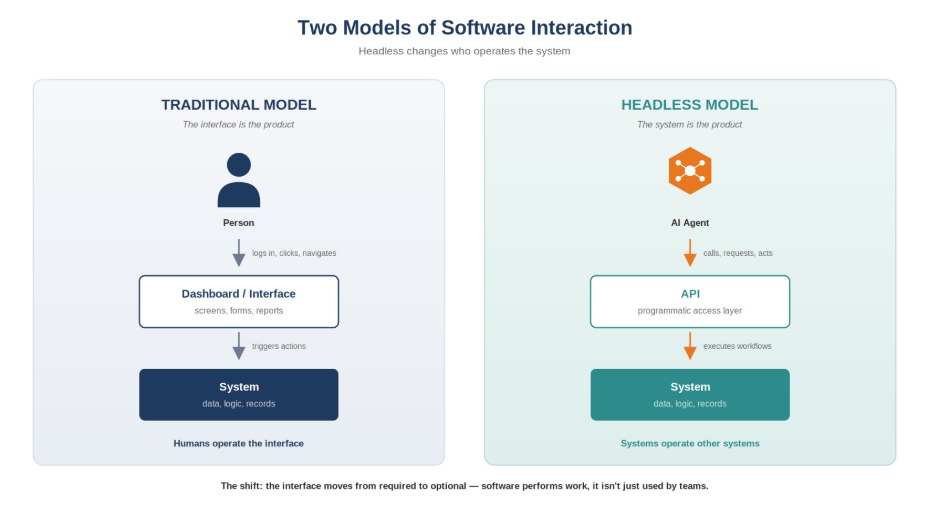
Figure 1. The paradigm shift: from interface-driven to system-driven operation.
This is where the distinction from “classic” automation matters.
Automation has been available for years but it requires predefined rules. Every step has to be configured in advance. The system can only follow the paths it’s given. When conditions change, workflows break or require manual intervention.
The emerging model is adaptive. Instead of defining every step, you define the outcome. Systems determine how to achieve it, adjusting as data and conditions change.
That’s the real shift: from executing instructions to making decisions.
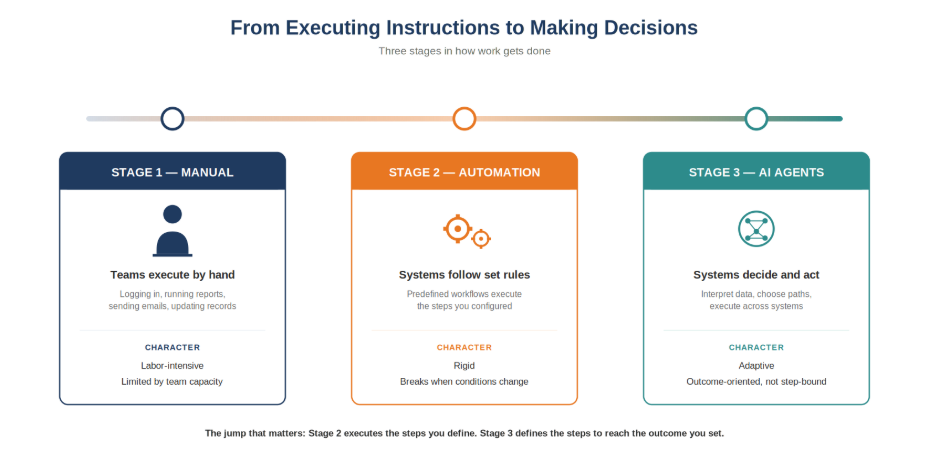
Figure 2. Three stages of how work gets done and why Stage 3 isn’t just “faster Stage 2.”
Salesforce’s move signals this approach is going mainstream. Their platform is positioning itself not just as a system of record, but as infrastructure that can be operated by AI, where the interface is optional, systems are designed for direct access, and AI becomes a primary operator of workflows.
Publishing and media businesses are built on repeatable workflows: subscription management, renewals, billing, segmentation, campaign execution. These are consistent, data-driven, and often time-sensitive and well suited to this shift.
But most organizations in this space are still managing:
That combination creates both real opportunity and real risk.
If systems can access clean data and operate against clearly defined workflows, most day-to-day execution can move out of manual processes. Identifying churn risk, triggering renewal campaigns, adjusting segmentation, these can happen continuously, without requiring teams to intervene at every step.
Teams spend less time operating systems and more time guiding strategy.
If the foundation is weak, systems still act but instead of improving performance, they scale inconsistencies and inefficiencies. They amplify whatever already exists, effective or not.
Organizations that benefit from this shift don’t approach it as a technology upgrade. They start with fundamentals, in sequence:
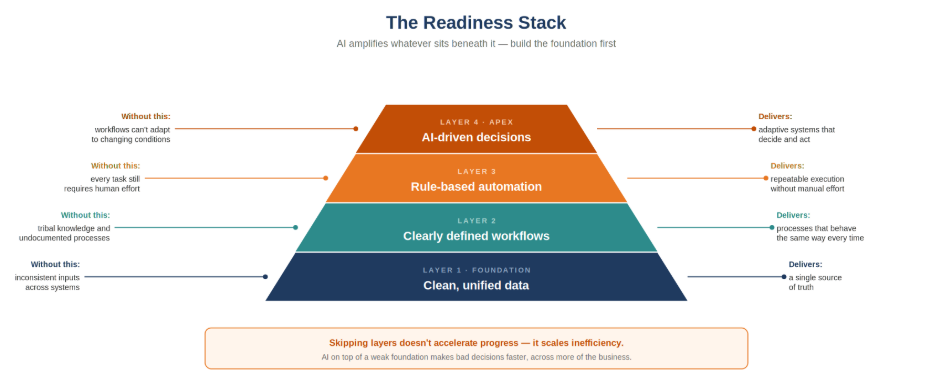
Figure 3. The Readiness Stack — each layer depends on the one beneath it.
The sequence matters. Skipping steps doesn’t accelerate progress — it introduces instability.
This is not a shift toward better tools. It’s a shift toward different operators.
For years, people have been the connective tissue between systems. They move data, execute processes, and make sure work gets done. That role is changing.
The future is not people using systems. It’s systems using systems.
The organizations that win this transition won’t necessarily be the most advanced. They’ll be the most prepared.


A single source of real-time customer insights, campaign management, fulfillment, financial reporting, and more.