
PART 1: THE MODERNIZATION FOUNDATION [LIFT-AND-SHIFT]
In today’s fast-moving digital publishing landscape, simply updating tools isn’t enough—organizations need a post-transformation mindset.
A Post-Transformation Mindset
In today’s fast-moving digital publishing landscape, simply updating tools isn’t enough—organizations need a post-transformation mindset. Legacy systems don’t just slow you down; they rack up technical debt, hike up maintenance costs, and leave you vulnerable to security risks. Worse, they quietly erode the trust you’ve built with customers. If you want to keep pace with modern demands (and your competitors), you need more than a system upgrade. You need a strategic reinvention—from your workflows to your data to how your teams actually deliver value.
“Modern computing doesn’t require a bloated tech stack. The most forward-thinking teams are simplifying, not adding. They’re cutting vendor sprawl, streamlining workflows, and making space for innovation.”
There has never been a better time to strategically reinvent your organization. Right now, we’re in the middle of two seismic shifts: AI tools are getting friendly enough for the front-end crowd, while back-end infrastructure is consolidating into three giant cloud infrastructure providers or “hyperscalers.” This combination is a once-in-a-generation opportunity to rewire the application layer—the point where users meet systems, data gets activated, and all the digital magic happens. This book has been written to walk you through how the Modern Media Tech Stack drives this opportunity: how to rethink your internal platform strategy while syncing up with—and taking advantage of—bigger industry shifts.
Computing platforms have always evolved (we do a deeper dive into this subject in Chapter 2). But what’s different now is the how. The core challenge stays the same—doing what you’ve always done, just in smarter, more connected ways.
Consider what happened with Netflix. In the early 2000s, Netflix revolutionized home entertainment by offering DVDs by mail with no late fees—a sharp contrast to Blockbuster’s brick-and-mortar model, which relied heavily on revenue from late returns. Blockbuster thought it was a cute gimmick... until it wasn’t. By the time Blockbuster tried to join the mailorder party in 2004, Netflix had already built loyalty and a superior tech stack.
Then came 2007: streaming. Suddenly, you didn’t need a mailbox—just Wi-Fi. Blockbuster couldn’t pivot fast enough. They were too bogged down by old systems and missed chances (including a $50 million offer to buy Netflix that they turned down). Netflix stock soared.
Blockbuster became a trivia question.
“As much as 70 percent of the software used by Fortune 500 companies was developed 20 or more years ago.”
Today, Netflix is one of the most powerful players in global entertainment—while Blockbuster lives on only as a single, independently owned store in Bend, Oregon.
The real question is: do you want to be Netflix or Blockbuster?
If you picked Netflix, that’s good. Because how you manage transitions—especially tech ones—can make or break your future. Digital communities are changing fast, and the ones that win won’t be the biggest or loudest. They’ll be the ones that adapt.
Much of today’s enterprise software still operates on legacy platforms, with architectures that date back to the 1970s. In contrast, consumers and leading-edge businesses have moved toward intelligent, responsive systems built for today’s scale and complexity. You wouldn’t drive a car from the 1970s unless it was a collector’s item. Yet we still run our business platforms that way. This outdated architecture has restricted our ability to innovate and adapt.
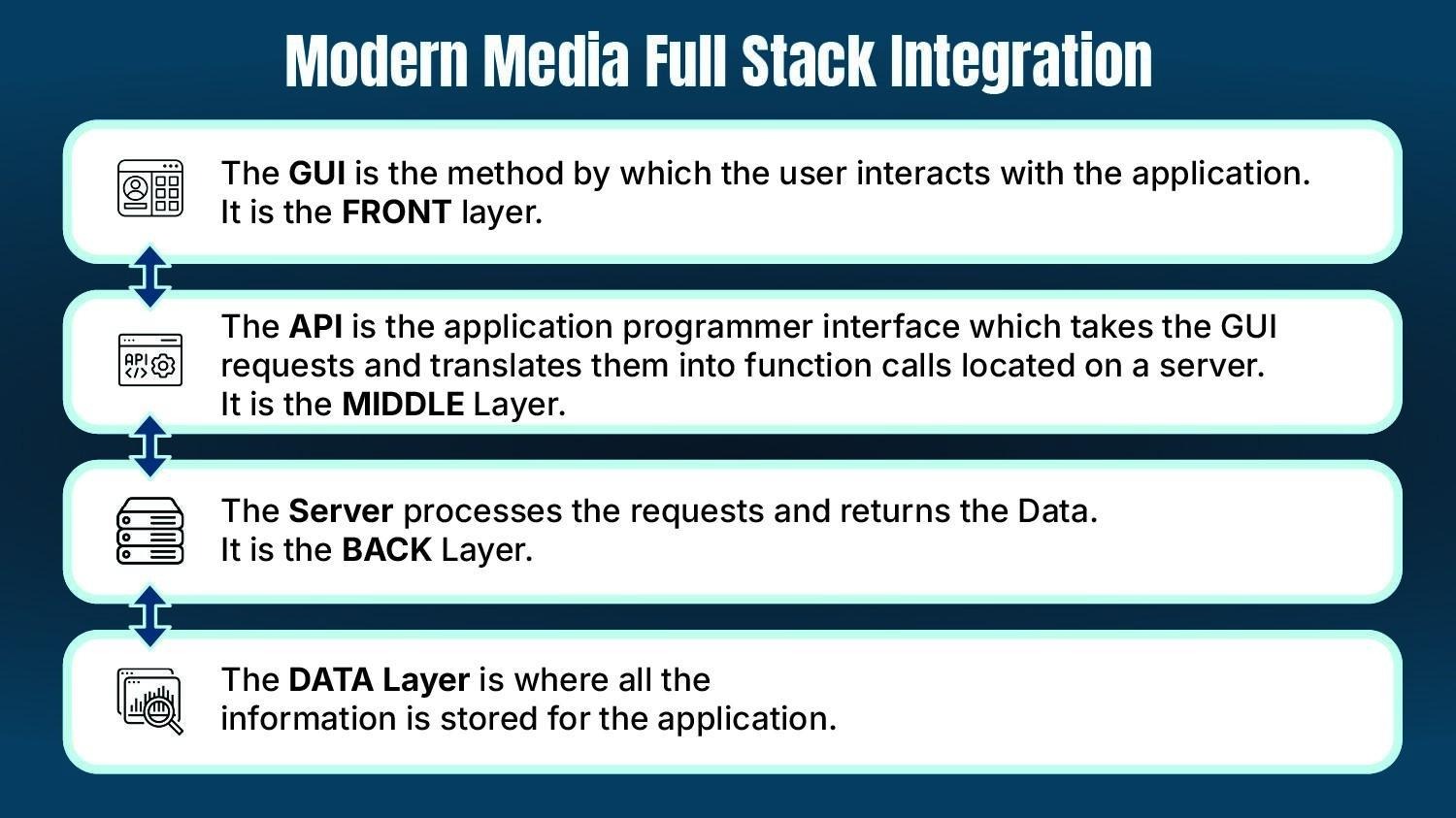
Back then, everything was siloed: the User Interface (UI) over here, the engineer’s Application Programming Interface (API) over there, server in the back, and a data layer holding it all together. All of it sweating away in a single monolithic data center.
These days? That legacy architecture is no longer sustainable.
What we’re offering in this book is simple: a new way to do old things better. The Netflix story makes the point, but history is full of examples. The real upgrade? Full-stack integration—bringing the Graphical User Interface (GUI), Application Programming Interface (API), server, and data into one Modern Media Tech Stack. When you modernize like this, platforms get cleaner, systems move faster, and users stop needing a degree in computer science to get things done.
The first step? Platform modernization. In the following case study, find out how a German luxury car manufacturer used a Modern Media Tech Stack for publishing to align content with upselling opportunities—and transformed their legendary brand into both a cultural touchstone and a revenue-generating platform.
“Harnessing generative AI can eliminate much of the manual work, leading to a 40 to 50 percent acceleration in tech modernization timelines.”
Platform Modernization as the First Leap
Modernizing legacy applications involves lifting core components from on-prem bunkers and moving them into the hyperscaler cloud. Why? Elastic scaling, real-time speed, and microservices that actually talk to each other.
Hyperscalers like Amazon Web Services (AWS), Google Cloud Platform, Microsoft Azure, and regional or sovereign clouds are transforming how we think about infrastructure. What once required separate, standalone products—like databases, analytics tools, and storage systems—are now delivered as a series of tightly integrated microservices across a single cloud platform.
Think of it like driving a car. You’re not thinking about spark plugs and transmissions. You hit the gas and go. That’s what a hyperscaler does—it abstracts the technology, so you don’t need to worry about where the database lives or how storage is configured. What matters isn’t the complexity under the hood, but the simplicity and power it gives you to move fast and get to where you need to go.
Crucially, this modernization isn’t just a “lift-and-shift,” or a migration strategy where an existing application is lifted from its current environment (often on-premises servers) and shifted to the
cloud—without making major changes to its architecture, code, or functionality. It requires data migration into modern data structures and business rule configuration management. These new cloud capabilities unlock value by introducing real-time event processing and enabling new types of customer experiences. Done right, you can finish this kind of transition in under a month and spend less than you would on a year of maintaining legacy architecture. And you get real, measurable Return On Investment (ROI) out of the gate.
Many publishers don’t just run one Enterprise Resource Planning (ERP) system, but rather a whole fleet of ERP systems, often operating in silos. This “ERP jungle” needs to be replaced in order to build a unified subscription ecosystem and deliver true customer-centric digital transformation.
Here’s what it looks like: you migrate data from your old on-prem setup to a cloud-based hyperscaler. So, your ERP system(s) to a regional cloud, for example. At the same time, you handle configuration so users barely notice the shift—they just log in and everything feels familiar (but faster).
Once you’re running on a modern cloud, things get interesting. You’re no longer just SaaS—you’re playing in the PaaS arena.
SaaS to PaaS: The Second Leap
This transition from Software-as-a-Service (SaaS) to Platform-as-a-Service (PaaS) enables publishers and enterprise clients to replace multiple IT tools with interoperable, AI-ready modules.
Lift-and-shift is a cloud migration strategy that gets you to the cloud quickly—existing applications, along with their virtual machines, data, and configurations, are moved from
on-premises infrastructure to the cloud—without changing the application’s architecture, logic, or design. This approach is often used for its speed and lower upfront risk. Your organization can quickly retire aging infrastructure and reduce data center costs. What’s required is a zero-legacy mindset; processes and datasets must also be retired. Without rethinking your strategy and applications, you’re still running a 90s engine under a sleek new hood. It’s a good first move— cheap, fast, safe—but it’s the starting line, not the finish.
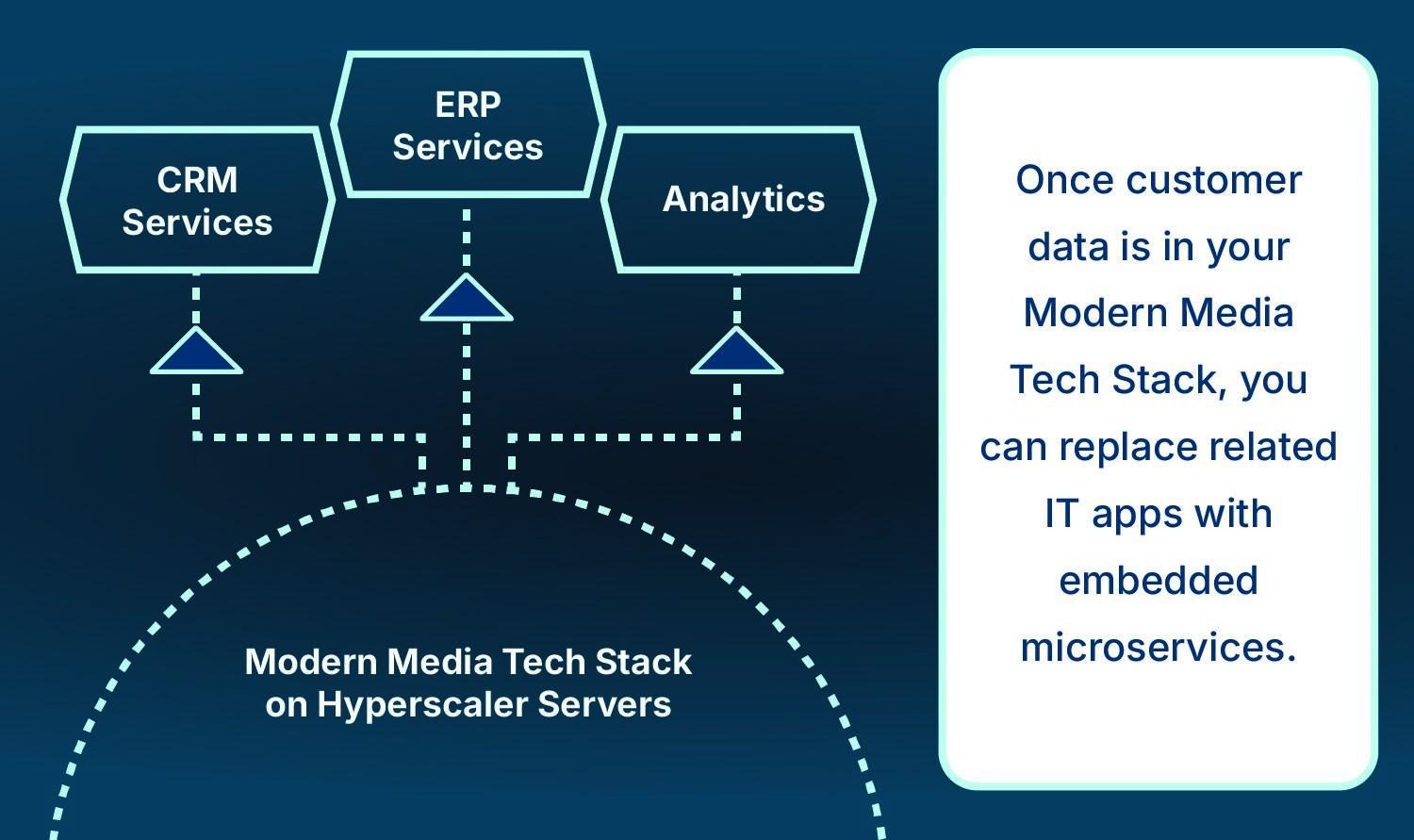
Once you’re in the cloud, you can swap out outdated analytics, marketing tools, and back-office systems for ones that work natively with your platform. For example, after migrating a customer engagement platform to a hyperscaler or sovereign cloud, you can replace peripheral systems such as analytics engines, customer relationship management (CRM) services, or enterprise resource planning (ERP) modules. Suddenly, you’re accessing tools once reserved for the big tech players—and using them to do more with less.
With your data now on a hyperscaler, you can unlock embedded microservices that cover everything from cybersecurity to AI-driven analytics. That creates a multiplier effect—you’re not just upgrading a platform; you’re overhauling your entire IT operation. Goodbye patchwork, hello smart stack.
But modernization doesn’t stop at the backend. The front end’s getting a radical facelift, too.
“Under our old legacy system, onboarding was a marathon: marketing staff needed 1–2 months, first-level call center agents about four weeks, and second- or third level specialists up to three months. With AI, that learning curve collapses—context is baked in from day one.” – Human Resources Director at a Global Media Company.
Agentic AI and the End of the GUI
Say goodbye to clunky dashboards and nested menus. With conversational AI stepping in, you don’t have to hunt through interfaces—you simply talk to the system.
The big shift? Natural language is now your front-end. Early on, search engines didn’t “get” humans, so we adjusted to use single word searches. Now tools like ChatGPT have flipped the script. These systems understand not just words, but context—whether you mean “transmission” in a car or as a virus.
Artificial Intelligence is delivering two major revolutions: one in how we speak to machines, and the other in how they think through problems. Large Language Models (LLMs) let systems understand nuance and deliver predictive insights in real-time.
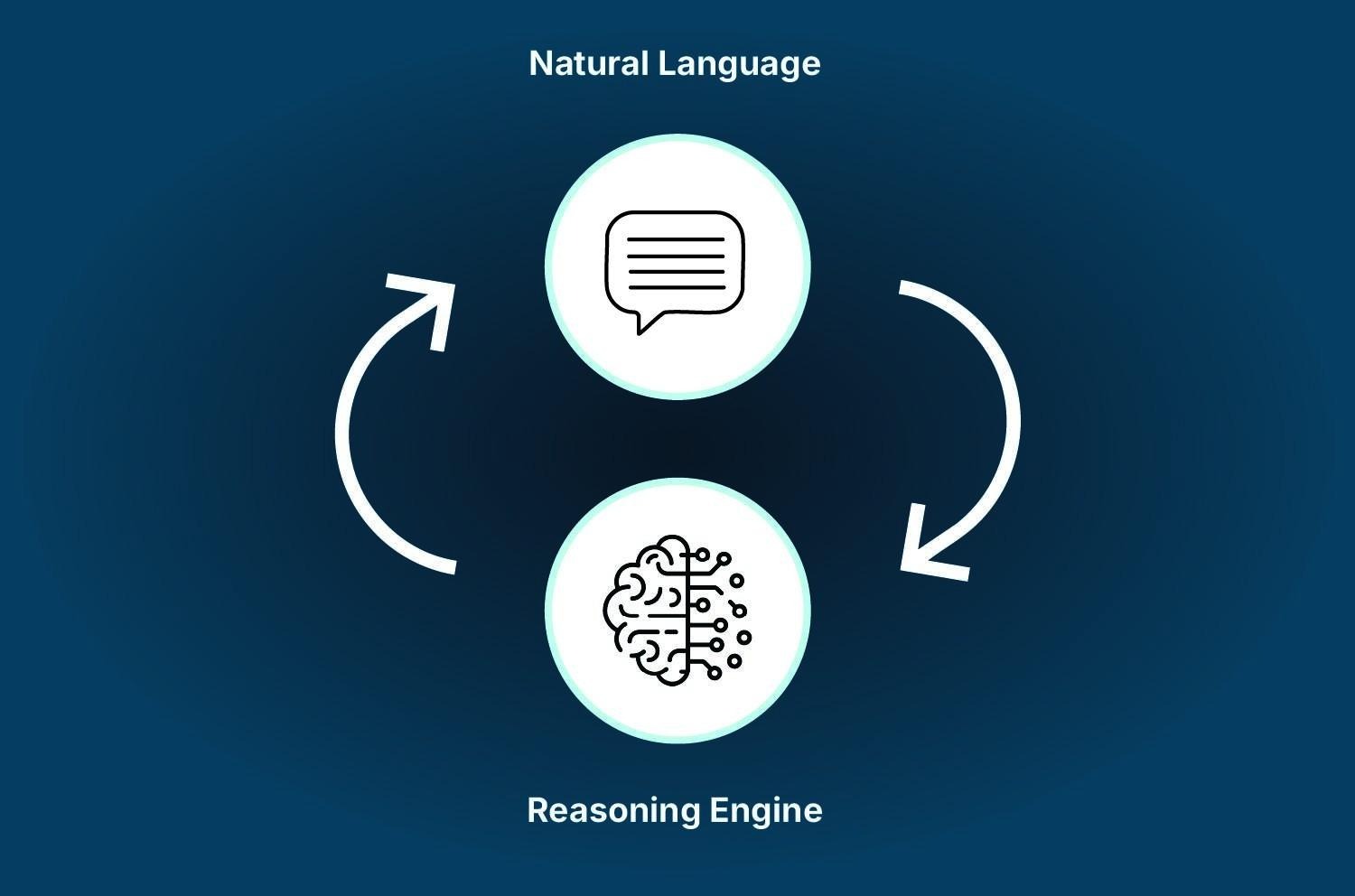
Agentic AI takes that further. These are bots trained to understand business concepts and intricate rules, “the context,” and execute required tasks. Want to send out renewal emails with an A/B price test? Done. Surface a trend in survey results? No problem. They work behind the scenes to deliver instant outcomes so humans don’t have to complete every task manually.
And when you mix hyperscaler platforms with embedded Agentic AI? Suddenly, all those legacy disconnected tools—SAP, Oracle, IBM—are collapsed into one unified “smart” environment.
This is the Modern Media Tech Stack. You can launch campaigns, crunch data, or automate workflows just by asking. Operations can be guided by conversations instead of workflows.
“The complexity of a subscription business is widely underestimated and not well understood. While the conversion to a Modern Media Tech Stack required a fundamental change to our business, it has been well worth it.” – Travis Lunau, Director of Marketing, Cottage Life
Why Now?
The stars have finally aligned. AI is no longer sci-fi and cloud infrastructure has coalesced into major players. If you wait too long to modernize, you’re not just falling behind—you’re forfeiting opportunities your competitors are already grabbing.
The Modern Media Tech Stack simplifies the complexity, boosts what you can do, and gets you ready for what’s next—a context-driven AI-enabled future. The merge of a smart
“context-aware” front-end AI with back-end hyperscalers is more than just a new tech trend—it’s a fundamental operating shift.
From modernizing core systems to unleashing intelligent automation, the Modern Media Tech Stack isn’t about survival—it’s about setting the pace. If you’re ready to engage, this is your blueprint for digital transformation.
Moving your platform to the cloud means rearchitecting your business. Transformation isn’t just crossing a river—it’s learning to navigate in a whole new ecosystem. From modernization to personalization, agentic AI to microservices, we’ll walk you through each step—including how to manage change (see Chapter 14).
Built with recurring-revenue businesses in mind—publishers, membership organizations, anyone juggling digital and analog needs—the Modern Media Tech Stack connects the dots: customer data, payments, product delivery, and engagement, all in one seamless platform—for true customer centricity.
In the next chapter, we’ll demonstrate how a modular, community-first mindset can help you trade your legacy anchors for modern agility, actionable insights, and personalized service—without ripping out everything you’ve built. Prioritizing strategic reinvention over patchwork updates, a media tech stack unifies modern capabilities—flexible, integrated, community-driven—helping businesses not just survive transformation, but lead it.
Let’s get to it.
Endnotes
- Aaron Bawcom, Matt Fitzpatrick, Chi Wai Cheung, et al, “AI for IT modernization: Faster, cheaper, better,” McKinsey & Company, 2 December 2024, https://www.mckinsey.com/capabilities/quantumblack/our-insights/ai-for-it-modernization-faster-c heaper-and-better.
- Aaron Bawcom, Matt Fitzpatrick, Chi Wai Cheung, et al, “AI for IT modernization: Faster, cheaper, better,” McKinsey & Company, 2 December 2024, https://www.mckinsey.com/capabilities/quantumblack/our-insights/ai-for-it-modernization-faster-cheaper-and-better.


A single source of real-time customer insights, campaign management, fulfillment, financial reporting, and more.
